Garuda: King of Birds, Steed of Vishnu & The Eternal Solar Flame
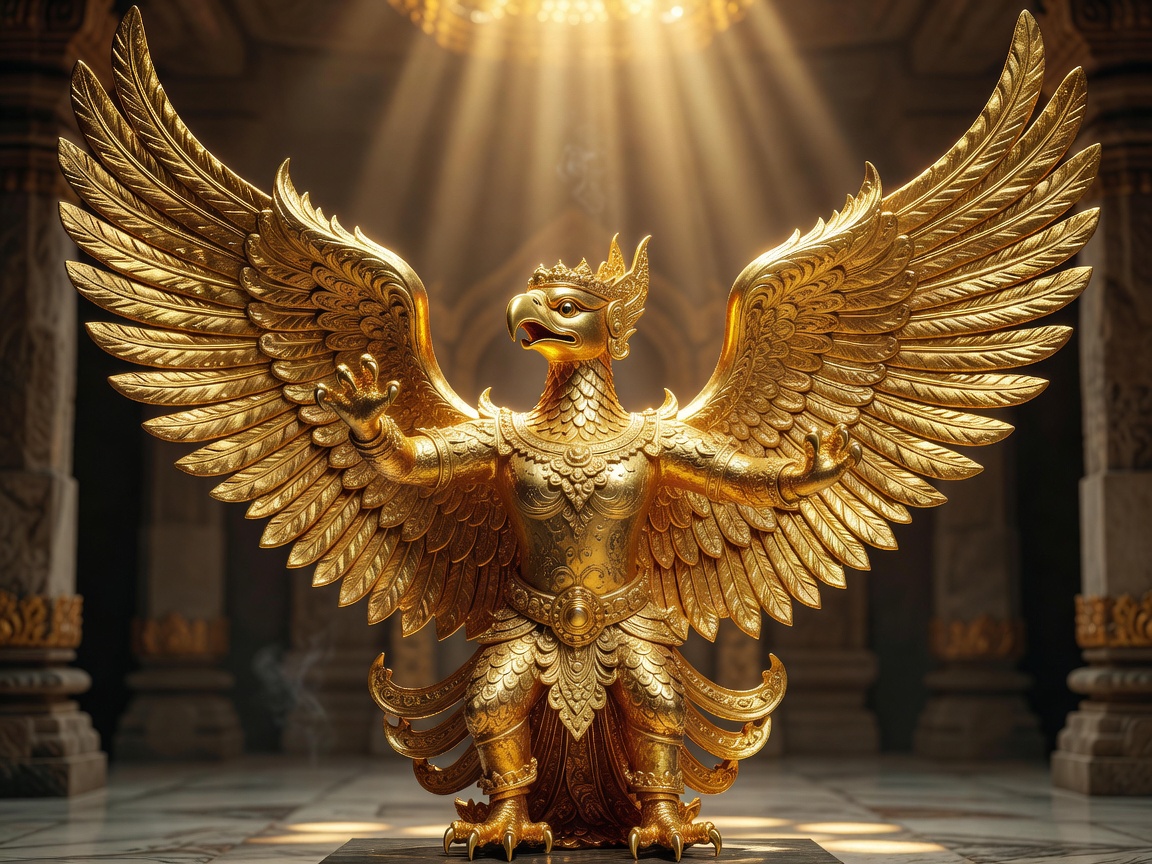
1. Mythological Birth and the Quest for Amrita
Garuda was born to the sage Kashyapa and Vinata, one of the mothers of creation. When his mother was deceitfully enslaved by her sister Kadru (mother of the serpentine Nagas), Garuda was tasked with retrieving Amrita—the nectar of cosmic immortality guarded by the gods in Indraloka—as the price for his mother's liberation.
Single-handedly piercing through celestial defensive rings of fire, revolving razor wheels, and two colossal venomous serpents, Garuda seized the nectar without tasting a solitary drop. Impressed by his peerless integrity and strength, Lord Vishnu granted him immortality without drinking the elixir and selected Garuda as his supreme mount (vahana) and emblem atop his battle standard (Garudadhvaja).
2. Cosmic Feud: Garuda and the Nagas
The perpetual conflict between Garuda (representing the solar sky, fiery winds, and celestial light) and the Nagas (representing subterranean waters, earthly primordial currents, and chthonic forces) forms a foundational motif across South and Southeast Asian art. From Angkor Wat in Cambodia to the temples of Java and Bali:
- Wingbeat of Gale Winds: According to the Mahabharata, the flap of Garuda's wings produces hurricanes capable of blowing mountains away and shaking the celestial spheres.
- Anti-Venomous Mastery: Garuda possesses divine immunity against serpentine poison, symbolizing spiritual triumph over worldly attachment and deception.
- Pan-Asian Transfusion: Revering Garuda as a state crest extends from Thailand (Krut) and Indonesia to Ulaanbaatar in Mongolia (Khangarid).
3. Buddhist and Southeast Asian Iconography
In Mahayana and Vajrayana Buddhism, Garudas form one of the Eight Classes of Spiritual Beings (Ashtagatyah). They represent wisdom that dispels the poisons of greed, aversion, and delusion. Sculptures depicting Garuda grasping two Nagas in talons signify cosmic equilibrium between the skies and the deep oceans.
Primary Source Reference:
Explore authoritative academic entries on Garuda at Wikipedia ↗ and consult the Adiparva of the Mahabharata.